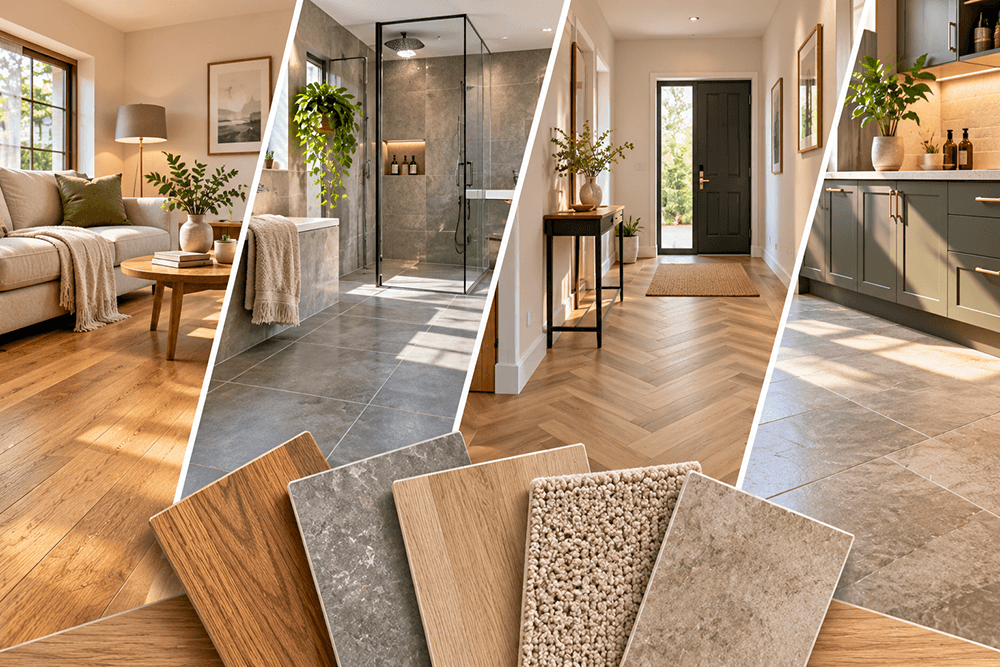
Choosing new flooring is one of the most important decisions when renovating or updating a home. Floors cover a large area, influence the overall appearance of a room and need to withstand everyday use for many years.
With so many materials available, it can be difficult to decide which option is most suitable. Wooden flooring, laminate, luxury vinyl tiles, ceramic tiles and carpets all have their advantages, but not every material works equally well in every room.
The right choice depends on how the space is used, the amount of foot traffic, moisture levels, maintenance requirements and, of course, the available budget.
Here are some practical considerations to help you choose suitable flooring for different areas of your home.
Consider How Each Room Is Used
Before comparing flooring materials, think about what happens in each room throughout the day.
A busy hallway experiences regular foot traffic, outdoor dirt and occasional moisture from wet shoes. A living room needs to feel comfortable and welcoming, while a kitchen floor must cope with spills, dropped objects and frequent cleaning.
Bedrooms generally experience less wear, allowing greater flexibility when choosing softer or more decorative finishes.
Bathrooms present a different challenge because the flooring needs to tolerate moisture and provide adequate slip resistance.
Understanding these differences will help narrow down the available options.
Wooden Flooring for Living Areas
Wooden flooring remains a popular choice for living rooms, dining rooms and bedrooms because of its natural appearance and versatility.
Solid wood flooring is manufactured from individual pieces of timber, while engineered wood typically consists of a real wood surface bonded to a layered supporting structure.
Both can provide an attractive finish, although they differ in cost, installation requirements and how they respond to changes in temperature and humidity.
Engineered wood can offer greater dimensional stability in some environments, making it worth considering where conditions fluctuate.
However, timber flooring still requires appropriate care. Standing water, excessive moisture and abrasive dirt can damage the surface over time.
When selecting wooden flooring, consider the hardness of the timber, the type of protective finish and whether the product is suitable for the intended installation method.
Laminate Flooring as a Practical Alternative
Laminate flooring offers the appearance of timber without using a solid hardwood surface.
It is available in a wide range of colours, textures and plank sizes, making it suitable for both traditional and contemporary interiors.
One of its main advantages is affordability. Laminate can provide an attractive finish at a lower initial cost than many natural wood products.
It is also relatively straightforward to maintain, with regular vacuuming and occasional damp cleaning normally sufficient.
However, not all laminate products are suitable for areas exposed to frequent moisture.
Water can sometimes penetrate joints and cause swelling, particularly with products that are not specifically designed for moisture resistance.
For kitchens and hallways, it is worth looking for flooring with suitable durability and moisture-resistance ratings rather than choosing purely on appearance.
Luxury Vinyl Tiles for Busy Homes
Luxury vinyl tiles, commonly known as LVT, have become a popular option for homeowners looking for durable and relatively low-maintenance flooring.
LVT is available in designs that resemble wood, stone and ceramic tiles, offering considerable flexibility when planning an interior.
Its resistance to everyday spills makes it particularly useful in kitchens, utility rooms and busy hallways.
Depending on the product, installation may involve adhesive fixing or a click-lock system.
Proper subfloor preparation is essential because imperfections underneath some vinyl products can eventually become visible through the surface.
Although LVT is generally easy to maintain, homeowners should follow the manufacturer’s guidance regarding cleaning products, temperature exposure and heavy furniture.
Ceramic and Porcelain Tiles for Kitchens
Tiles are frequently used in kitchens because they provide a durable, easy-to-clean surface.
Ceramic tiles are suitable for many domestic applications, while porcelain tiles are typically denser and have lower water absorption.
Both are available in numerous colours, sizes and finishes.
Large-format tiles can create a clean, contemporary appearance with relatively few grout joints, while smaller tiles provide opportunities for more traditional patterns.
One important consideration is the condition of the subfloor.
Tiles require a suitable, stable base, and inadequate preparation can contribute to cracking or movement after installation.
Grout colour and joint width should also be considered during the design stage, as they can influence both appearance and maintenance.
Choosing Flooring for Bathrooms
Bathroom flooring needs to withstand regular moisture exposure, splashes and cleaning.
Porcelain and ceramic tiles are common choices, provided the selected products are suitable for bathroom floors and offer appropriate slip resistance.
Some vinyl flooring products can also work well in bathrooms, although suitability varies between manufacturers and product ranges.
Traditional timber flooring is generally more vulnerable to moisture and may require additional precautions.
When choosing a bathroom floor, appearance should be balanced with safety and practicality.
A highly polished surface may look attractive in a showroom, but it could become slippery when wet.
It is also important to consider waterproofing in wet areas and ensure that any required preparation is completed before the final floor covering is installed.
Carpet for Bedrooms and Comfortable Spaces
Carpet remains a practical choice for bedrooms because it provides a soft, warm surface underfoot.
It can also help reduce noise, making it useful in upstairs rooms and properties where sound transmission is a concern.
Carpets are available in different fibres, pile heights and constructions.
Wool carpets offer a natural appearance and resilience, while synthetic materials may provide greater stain resistance or lower maintenanc
No responses yet