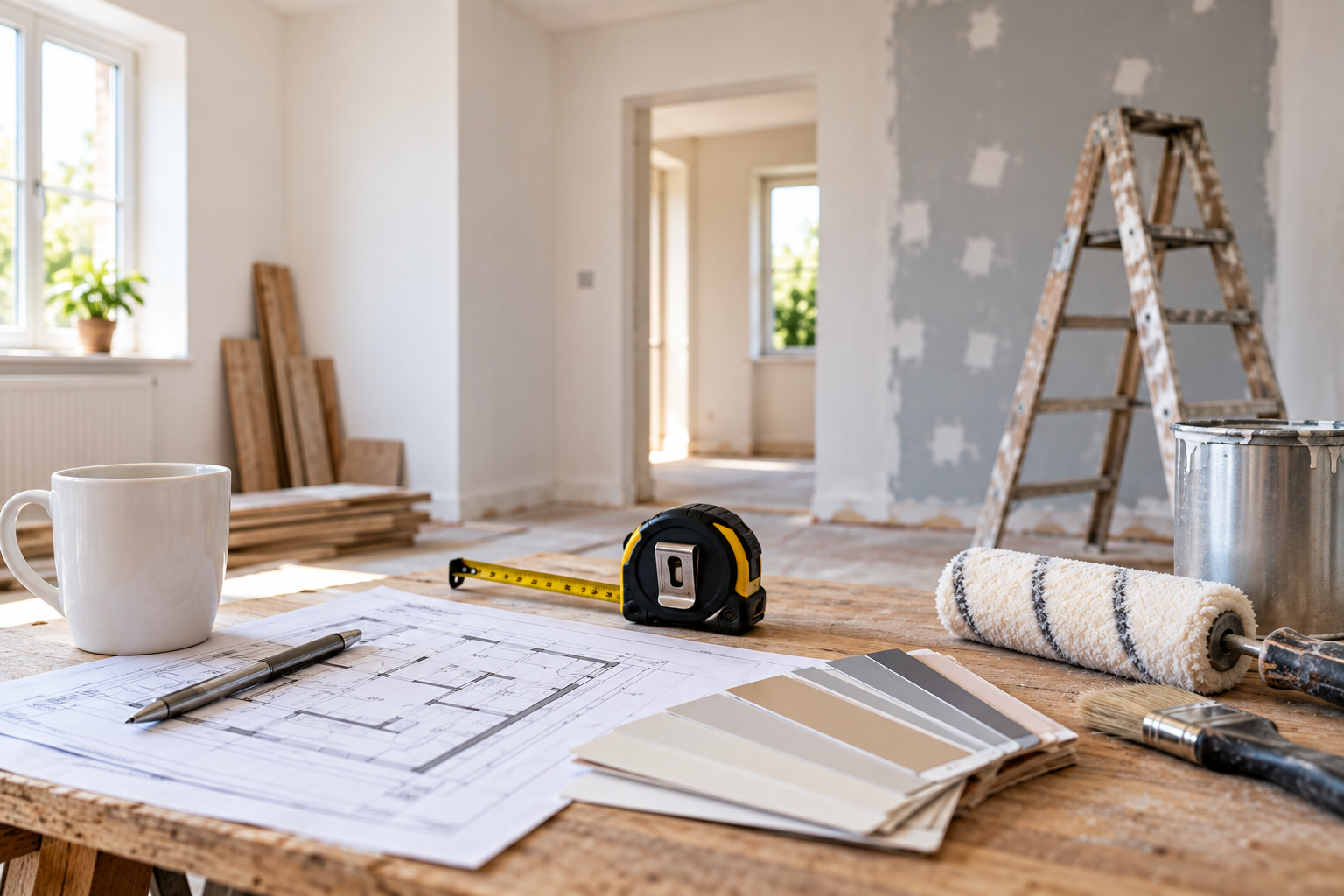
Renovating a home can improve the way a property looks, feels and functions, but even relatively straightforward projects can become more complicated than expected.
Many renovation problems do not come from the work itself. They begin much earlier, with unrealistic budgets, rushed decisions or simply starting without a clear plan.Taking a little more time at the beginning can help reduce disruption, unexpected costs and the need to redo work later. Here are some of the most common home renovation mistakes and practical ways to avoid them.
Starting Without a Clear Plan
One of the easiest mistakes to make is beginning work before deciding exactly what needs to be changed.It can be tempting to start removing old finishes as soon as you have decided to renovate a room. However, doing so without a clear sequence of work can create unnecessary problems.Before starting, make a simple list covering:
what needs replacingwhat can remainwhich jobs require tradespeoplethe order in which the work should be completedmaterials that need to be purchasedapproximate costs
This does not need to become a complicated project-management document. Even a basic plan can make it much easier to identify potential problems before work begins.
Underestimating the Budget
Renovation costs can increase quickly when unexpected work is discovered.Removing flooring might reveal damaged boards underneath. Taking tiles from a bathroom wall could expose poor plasterwork or previous water damage. Electrical or plumbing work may also become necessary once older fittings are removed.For that reason, it is sensible not to spend the entire available budget on the visible parts of the project.Keeping a contingency fund gives you some room to deal with unexpected repairs without having to stop the renovation halfway through.The appropriate amount will depend on the age and condition of the property, but older homes in particular can contain surprises once existing finishes are removed.
Choosing Materials Only by Appearance
How a material looks is important, but appearance should not be the only consideration.Different areas of a home have very different requirements. Flooring in a hallway needs to cope with considerably more wear than flooring in a spare bedroom. Bathroom finishes need to tolerate moisture, while kitchen surfaces often need to withstand heat, spills and frequent cleaning.Before choosing a product, consider:
durabilitymaintenancemoisture resistanceinstallation requirementsreplacement costswhether it is suitable for the intended room
The most visually impressive option is not necessarily the most practical one.
Ignoring Preparation Work
Good preparation is one of the least exciting parts of renovation, but it often determines the quality of the finished result.Walls may need filling and levelling before decorating. Floors may need repairs before new coverings are installed. Bathrooms may require suitable waterproofing before tiling begins.Skipping these stages can save time initially, but problems often appear later.Paint can highlight uneven walls, tiles can crack if the surface underneath moves, and poorly prepared flooring may develop visible imperfections.It is usually better to spend additional time preparing the underlying surface than trying to correct problems once the finishing materials have already been installed.
Making Decisions in the Wrong Order
Renovation decisions are often connected.For example, changing the position of a shower may affect plumbing. Moving kitchen appliances may require changes to electrical supplies. Installing new flooring can alter finished floor levels and affect doors or skirting boards.Ideally, structural work and services should be considered before decorative finishes.A typical sequence might involve:
repairs and structural alterationsplumbing and electrical workplastering and surface preparationflooring and tilingdecoratingfittings and finishing details
The exact order will vary between projects, but thinking about dependencies can prevent completed work from having to be disturbed later.
Following Trends Too Closely
Trends can provide useful inspiration, but completely designing a room around a current fashion can sometimes make it date quickly.Large permanent elements such as floors, tiles, worktops and fitted furniture are usually more expensive to replace than paint colours, lighting or decorative accessories.A practical approach is to use relatively timeless finishes for the expensive parts of a renovation and introduce stronger trends through items that can be changed more easily.This gives the property some personality without making future updates unnecessarily expensive.
Forgetting About Storage
Storage is often considered after the main renovation decisions have already been made.That can be a missed opportunity, particularly in smaller homes.Renovation work may create opportunities for:
built-in cupboardsshelving within unused recessesunder-stair storagebathroom nichesfitted wardrobesadditional kitchen storage
Planning these features early usually produces a cleaner result than trying to add freestanding storage afterwards.
Buying Everything Too Early
Ordering materials well in advance can be useful, particularly when products have long delivery times. However, buying everything before measurements and specifications are confirmed can create another problem.Room dimensions may change slightly once old finishes are removed. The required quantity of materials can also depend on the chosen installation pattern or preparation work.Where possible, confirm accurate measurements before ordering expensive or non-returnable products.At the same time, avoid leaving essential purchases until the last minute. A missing fitting or delayed delivery can hold up several other stages of the renovation.The aim is to order at the right point in the project rather than simply as early as possible.
Changing the Plan Repeatedly
Small adjustments are normal during renovation, but frequent changes can quickly increase both the cost and duration of a project.Changing a tile before installation is relatively simple. Changing it once half of the room has already been tiled is considerably more difficult.Try to make important decisions before each stage begins and avoid altering them unless there is a genuine reason.This is particularly important for plumbing, electrical positions and permanently fitted items.
Trying to Do Every Job Yourself
DIY can reduce renovation costs, and many jobs are perfectly reasonable for homeowners to undertake themselves.Painting, decorating and some basic preparation work are common examples.However, there is an important difference between saving money and attempting work that requires specialist knowledge.Electrical, gas, structural and certain plumbing jobs may require qualified professionals. Even where regulations do not specifically require a specialist, poor workmanship can become expensive to correct later.Knowing which parts of a project you can confidently handle yourself is an important part of planning.
Overlooking the Small Finishing Details
A room can contain expensive materials and still feel unfinished if the smaller details have been overlooked.Uneven sealant, poorly positioned switches, visible gaps, mismatched fittings or unfinished edges can attract more attention than people expect.Allow enough time at the end of a project for these details.Walk through the completed room and make a list of minor items that need correcting. Finishing them properly can make a considerable difference to the overall impression of the renovation.
Plan First and Renovate Second
Successful renovation is usually less about making every possible improvement and more about making the right decisions in the correct order.A clear plan, realistic budget and careful preparation can prevent many of the problems that cause projects to become unnecessarily expensive or disruptive.
Whether you are refreshing a single room or gradually improving an entire property, taking time to consider how each stage affects the next can make the renovation considerably easier to manage.
No responses yet