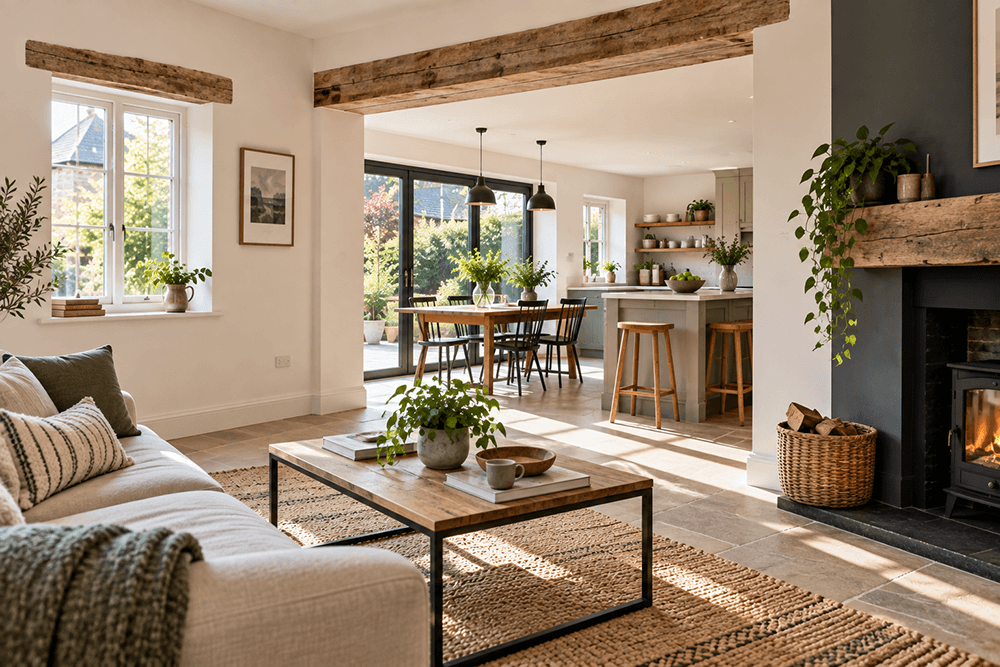
Older homes often have plenty of character, but they can sometimes feel darker or more enclosed than newer properties.
Smaller windows, deeper room layouts, darker finishes and traditional furniture arrangements can all reduce the sense of space. Fortunately, improving this does not always require major structural work.
A few carefully chosen changes can make rooms feel lighter, more open and easier to live in while still keeping the character of the property.
Start With the Wall Colours
Wall colour has a major influence on how bright a room feels.
Dark colours can work well in the right setting, but in rooms that already receive limited natural light they may make the space feel smaller.
Lighter shades reflect more light around the room and can help create a more open appearance.
That does not necessarily mean using pure white everywhere. Soft off-whites, warm neutrals, pale greys and muted natural tones can all brighten a room while still giving it some warmth.
The best colour will depend on the amount and direction of natural light.
A north-facing room, for example, may benefit from warmer tones, while a very bright south-facing room can usually handle cooler shades more easily.
Make Better Use of Natural Light
Before adding more artificial lighting, look at how the existing daylight enters the room.
Heavy curtains, large pieces of furniture and clutter around windows can block more light than expected.
Using lighter curtains or blinds can allow more daylight into the room while still maintaining privacy.
It is also worth keeping window sills relatively clear. Even small changes around the window area can make the room feel noticeably brighter.
Where privacy is important, translucent blinds or light-filtering window coverings can provide a useful compromise.
Use Mirrors Carefully
Mirrors are one of the simplest ways to increase the feeling of light and space.
A well-positioned mirror can reflect daylight into a darker area of the room and make the space appear deeper.
Large mirrors often have more impact than several small decorative ones.
Positioning a mirror opposite or close to a window can be particularly effective, although it is worth checking what it will actually reflect.
The aim is to reflect light or an attractive part of the room rather than a cluttered corner.
Reduce Visual Clutter
A room does not need to contain very little furniture to feel spacious, but too many visible items can make it feel busy.
Open shelves, surfaces filled with accessories and multiple small pieces of furniture can all break up the room visually.
Try grouping decorative items rather than spreading them across every available surface.
Closed storage can also help by keeping everyday items out of sight.
Simple storage improvements often make a room feel calmer without requiring any permanent changes.
Choose Furniture That Suits the Room
Furniture that is too large for a room can quickly make it feel cramped.
This is particularly common in older properties where rooms may be narrower or have more awkward layouts.
Before buying new furniture, measure the space carefully and consider the routes people use to move through the room.
Furniture with visible legs can also help create a greater sense of floor space because more of the floor remains visible underneath.
In smaller rooms, choosing fewer well-proportioned pieces often works better than trying to fit in several large items.
Keep Flooring Consistent
Using similar flooring through connected areas can make a home feel more continuous.
Frequent changes in flooring colour or material can visually divide the property into smaller sections.
Where practical, using the same or similar flooring through hallways and adjoining living spaces can make the layout feel more unified.
If different materials are necessary, choosing colours that work well together can still help maintain a sense of flow.
Improve Artificial Lighting
Natural light changes throughout the day, so artificial lighting also plays an important role.
Relying on a single ceiling light often creates strong shadows and leaves corners looking dark.
Using several sources of light can make the room feel more balanced.
These might include:
- ceiling lighting
- floor lamps
- table lamps
- wall lights
- under-cabinet lighting
- task lighting
Warm white lighting is often comfortable in living areas, while brighter task lighting can be useful in kitchens and workspaces.
Keep Window Treatments Simple
Heavy layered curtains can suit some traditional interiors, but they can also make smaller rooms feel more enclosed.
Simpler window treatments can create a cleaner appearance and allow more of the window to remain visible.
Where curtains are used, hanging the rail slightly wider than the window can allow the fabric to sit beside the window rather than covering part of the glass when open.
This can help maximise available daylight.
Use Glass and Reflective Surfaces
Reflective finishes can help distribute light around a room.
Glass tables, glazed doors, mirrors and glossy surfaces can all contribute, although they should be used in moderation.
Internal glazed doors can be particularly useful where one room receives more daylight than another.
They allow light to travel between spaces while still keeping the rooms separate.
In some properties, simply replacing a solid internal door with a glazed version can make a noticeable difference.
Pay Attention to Doors and Openings
Doors can interrupt sightlines and make rooms feel smaller when they remain open into the space.
Depending on the layout, sliding doors, pocket doors or doors that open in a different direction may improve the use of space.
Even without changing the doors themselves, keeping routes between rooms clear can make the property feel more open.
Avoid placing large furniture close to doorways where it can restrict movement or block views into the next room.
Make Smaller Improvements First
It is easy to assume that a darker older property needs major alterations, but smaller improvements can often produce a significant result.
Before considering structural changes, try improving:
- wall colours
- lighting
- furniture layout
- storage
- window treatments
- mirrors
- flooring continuity
These changes are usually easier and less expensive to reverse if you later decide to redesign the room.
Work With the Character of the Property
Making an older home feel brighter does not mean removing everything that makes it distinctive.
Original fireplaces, timber details, traditional doors and other period features can still work well within a lighter interior.
The aim is to improve the way light moves through the space while keeping the features that give the property its character.
A balanced approach often produces a better result than trying to make an older property look completely new.
Small Changes Can Make a Big Difference
Creating a brighter and more spacious home is often about improving several small details rather than making one dramatic change.
Lighter finishes, better lighting, suitable furniture and improved storage can all contribute to the overall effect.
By looking at how light, colour and layout work together, it is possible to make an older property feel more open and comfortable without losing the features that make it unique.
No responses yet